Begin or Further your Journey to enjoying the night sky through a telescope or binoculars
Amateur astronomers and most Lowbrows find visual observing to be vastly rewarding. With the advent of smart telescopes, stunning images from space telescopes and the internet, visual observing can be underwhelming without embracing some key concepts before looking at the night sky through a telescope or binoculars. The goal of this page is to point you to this background material so that you enjoy all the wonder of the night sky that it deserves.
What is up there?
Your journey begins with learning:
What is up there to see?
What astronomical events are happening and when can I see them?
Do I understand how to find objects, constellations and planets in the sky?
Can it be seen with my naked eye, or do I need binoculars or a telescope?
Can I expect to see this object in my backyard or do I need to find a dark sky to appreciate it?
Once I have chosen an a object, do I know the science about this object.
We recommend to do some learning before putting down money on a telescope, plunking it down in your back yard and becoming frustrated with the experience. Read on for pointers and resources to get your started.
How to Observe
“There it is!!” “I found it!!” “Wow, that is beautiful!!” “That is so cool that I can see this object that is so far away and is [one of our planets; a stellar nursery; a distant galaxy; a cluster of thousands of stars] “
These moments are best captured by learning your way around the sky, what objects are present in the sky tonight, what instrument is best suited for the task, and most of all, understanding some key properties about the object or event you are trying to observe. Learning how to read star charts, understanding the movement of the sky both at night and seasonally, and knowing what objects will give you the best view taking into account your equipment or naked eye will greatly enhance your experience. We recommend two places to start. Visit our How to Observe page, and visit the earthsky.org page called Favorite Star Patterns to begin to learn your way around the sky.
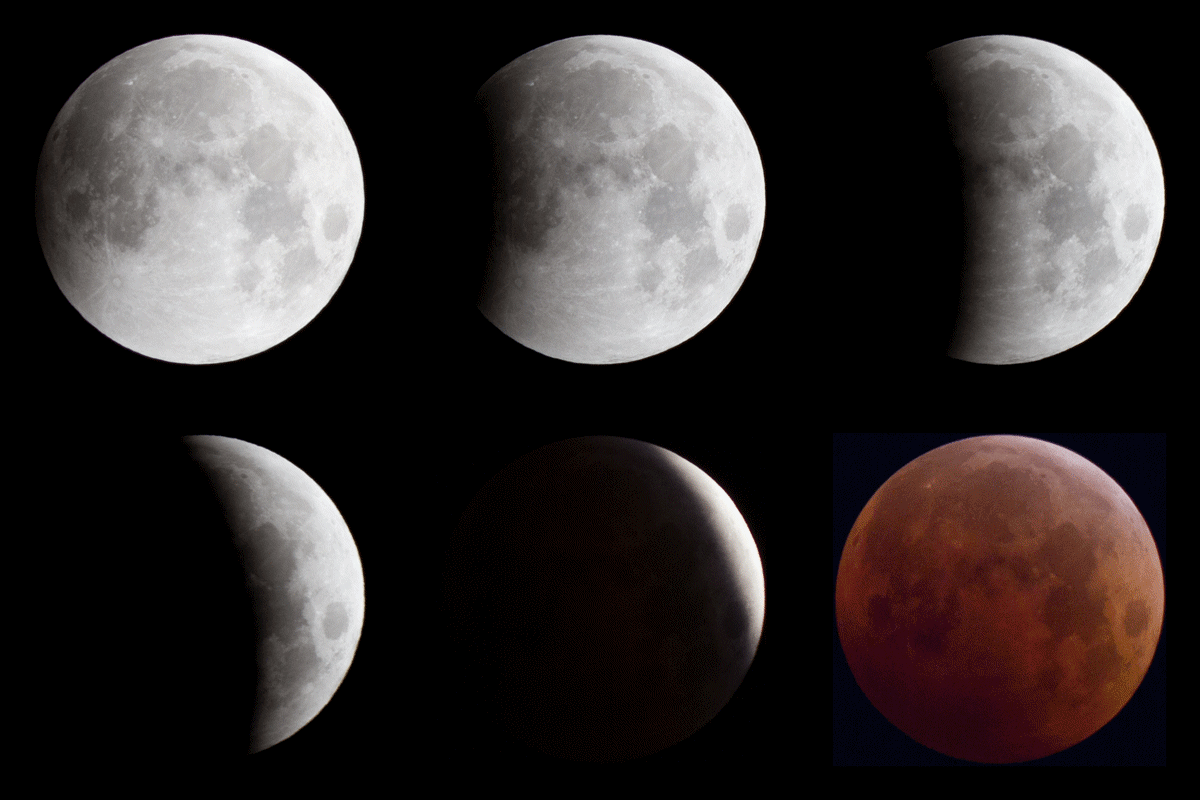
Lunar eclipse captured by Lowbrow member Doug Scobel
Places to Observe
Where to do the observing is as important as choosing a target or event to observe. Depending on the object, you may need to travel to darker skies if, like many of us, you live in an urban area. In our current times, light pollution forces us to travel to dark skies. Visit our Where to Observe page for more information.
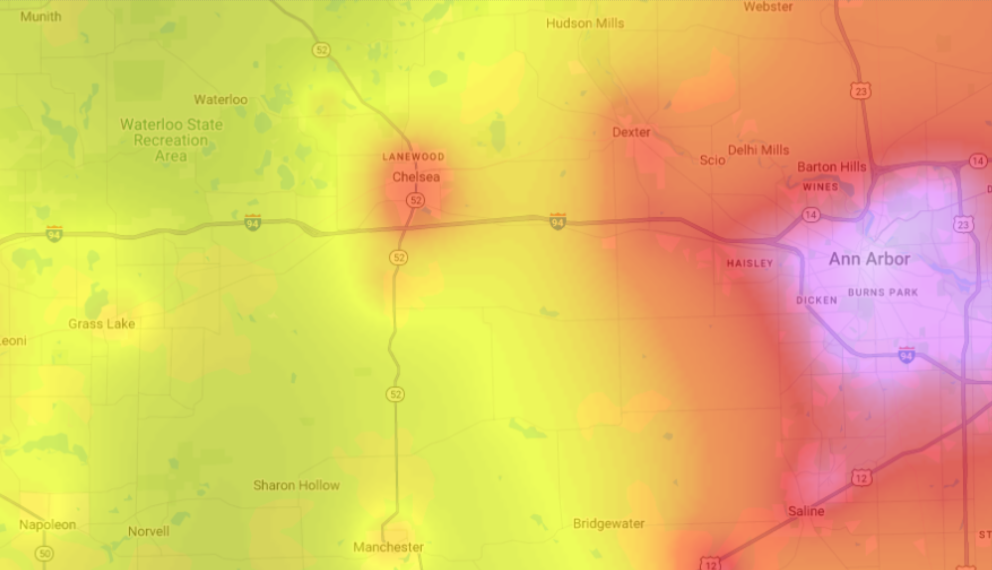
The Ann Arbor area Bortle Map. The yellow-yellow/green is Bortle 5. Note that most of the recommended Places to Observe fit within the yellow region, excepting those within the city of Ann Arbor.
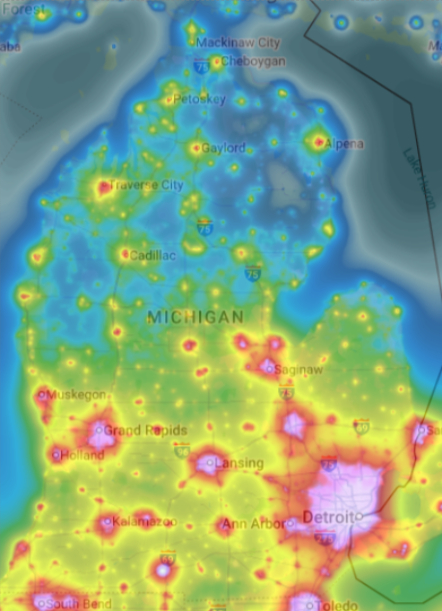
The Bortle Map of Michigan. Green is Bortle 4, Blue is 3 and Dark Blue to Gray is Bortle 2. Bortle 1 is only possible in the middle of the Great Lakes. Lake Hudson is the green area below Jackson, Port Crescent is in the Thumb and other sites up north are in the Blue to Gray.